
Success Formula
Find out what were the keys that led this inspiring leader to success.
As we have seen in previous editions, just as there are great businessmen and leaders who inherited wealth and large companies, we have also presented extraordinary cases of struggle, sacrifice and overcoming.
But few like the case of Andrew Carnegie.
A man who went from surviving famine and poverty, to becoming the second richest man in history, then donating much of his wealth to building libraries, universities, and fighting global inequality. Without a doubt, an example to follow.
Go to the Leader's Bio
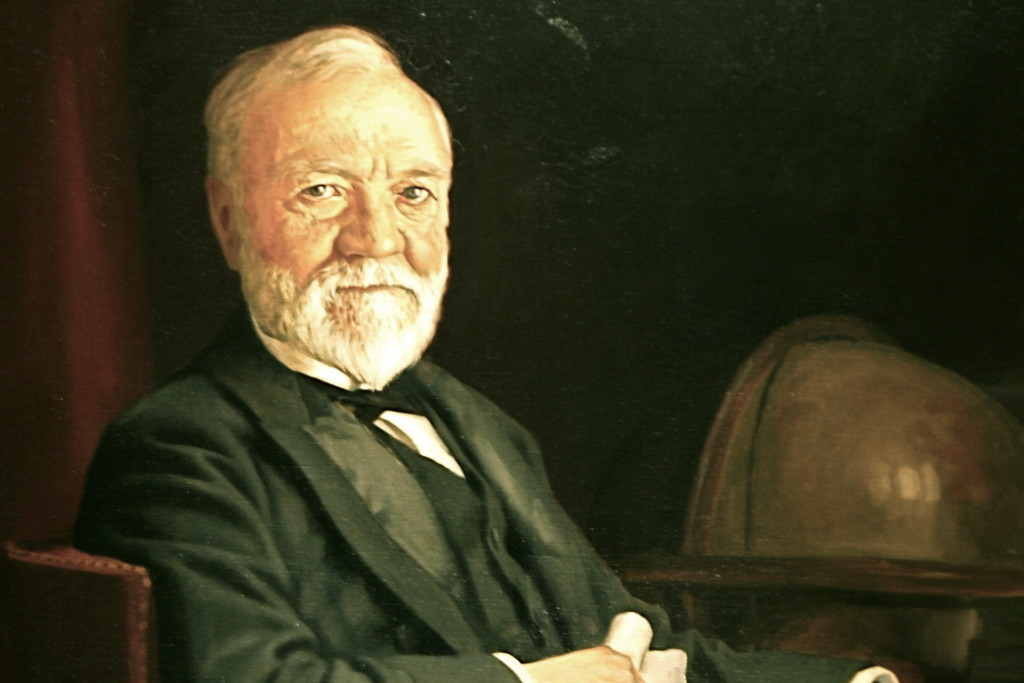
“As I grow older, I pay less attention to what men say. I just watch what they do.”
Andrew Carnegie was the representation in life of a self-made businessman, the materialization of the so-called "American Dream", a man who as a child slept early every night, looking for his dreams to make him forget his misery and the hunger he suffered, and who After years of hard sacrifice, ingenuity, work and effort, he would become the man with the second largest wealth in history.
Due to his poverty, Carnegie did not have studies, all his education was self-taught. His taste for literature was born when he worked as a radio operator in Pennsylvania, where he mastered sounds, to the point of being able to translate on the spot and without having to write.
“A man who acquires the ability to take full possession of his own mind may take possession of anything else to which he is justly entitled.”
His first job was as a bobbin boy in a textile factory, he earned $1.20 a week, plus 80 cents if he lost the boiler on; 35 years later he owned the most profitable iron company in the world.
Notably, his experience in the telegraph, as well as in the railroad industry, made this Scotsman a staple during the American Civil War.
His business acumen, charisma and knowledge of literature, as well as his presence at social events since he was young, helped him establish partnerships with companies that did what his did not, obtaining advantages over their competitors and envisioning the direction that the industries would take.
Andrew Carnegie was a man who broke the rules, who knew how to attract the attention of his superiors, form alliances and continually seek improvement until he became a successful businessman who, once fulfilled, chose to share his knowledge and his vision of life with others. through philanthropy and the construction of cultural and educational buildings, which to date remind us of the story of overcoming one of the greatest business leaders in modern history.
Are you enjoying the content you are reading?
Don't miss any of the Industry Leaders publications by subscribing to our free weekly newsletter.
Subscribe NowBiography
Learn more about the personal life of this inspiring leader.
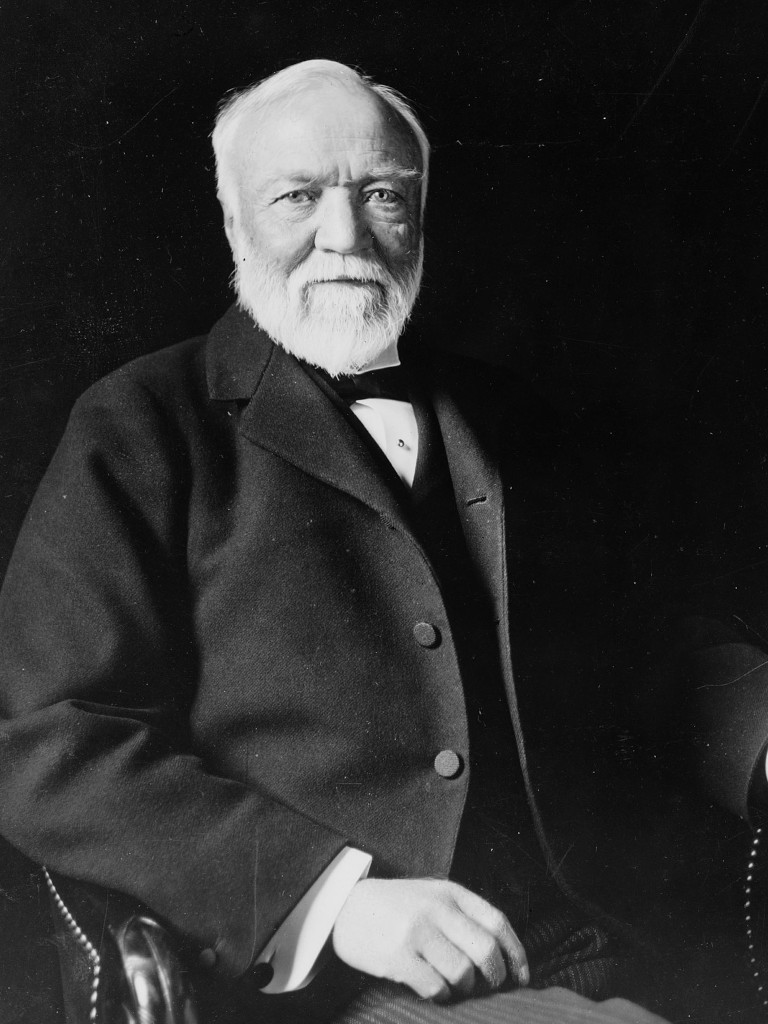
Andrew Carnegie
Andrew Carnegie was born on November 25, 1835 in a humble house in Dunfermline, a Scottish city in the United Kingdom, in a family of master weavers.
His childhood was extremely complicated due to the economic shortcomings of his family, which forced them to move to the United States in 1847, settling in Allegheny, Pennsylvania, where two of Andrew's aunts lived.
With his entire family living in one room, Andrew Carnegie's first job was at age 13 changing spools of thread in a cotton mill, working 12 hours a day, six days a week.
By 1851 he got a job as a telegraph operator in an Ohio Telegraph office, earning $2 a week. In this job he would develop one of his greatest passions: reading, especially for the works of William Shakespeare.
Also, part of his job included taking messages to the theater sporadically, so he managed with the manager to get there before the curtains went up and he let him see the show for free.
In 1853 and at the age of 18, Carnegie would get a job that would change his life. He was hired by the Pennsylvania Railroad Company to work as a clerk and telegraph operator for a salary of $4 dollars a week.
Quickly his passion for reading and his skills helped him rise through the ranks until at age 20 he became Manager of the Pittsburg station, as well as being the apprentice of Thomas A. Scott, owner of the company.
Scott helped Andrew Carnegie make the first investments with his savings, investing in sleeping cars for the same company and reinvesting his profits in the iron, bridge and rail industry, all over the railway industry.
During the Civil War, Carnegie served as superintendent of the Military Railroads, helping to open rail lines to Washington. He also worked on the telegraph lines of the Eastern Union Government, hence the reason for his characteristic scar on his cheek.
After the war, he decided to leave the railway industry and dedicate himself to the iron foundry business, investing in the purchase of ore fields and obtaining large dividends thanks to the reduction of costs by carrying out mass production, thus, Carnegie Steel was born in 1870.
Ten years after its inception, Carnegie Steel was the largest industrial pig iron, rail steel, and coke factory in the world.
By 1888 Carnegie bought out his competitor, the Homestead Steel Works, which had a huge plant along with a supply of coal and iron mines, as well as a fleet of steamships.
Finally in 1892 he decided to merge the two companies and those of their associates to create the Carnegie Steel Company.
For several years, Carnegie Steel Company was the most profitable company in the world, despite this in 1910, Andrew Carnegie decided to sell the company for $480 million dollars to J.P. Morgan, who years later would make it the U.S. Steel.
From then until the last years of his life, Carnegie decided to invest his money in philanthropy, building libraries and creating educational and research institutions.
Andrew Carnegie died on August 11, 1919 in Lenox, United States, from pneumonia.
PHILANTHROPY
Although during his time as a businessman and tycoon in the metal industry he paid his employees the usual low wages of the time, after selling the Carnegie Steel Company he donated much of his wealthy fortune to carry out construction works. philanthropy.
This is because he thought that the life of a wealthy businessman should have two facets. The first is the accumulation of wealth. The second was the distribution of it for noble causes.
Carnegie built and financed more than 3,000 libraries, parks, universities, schools, museums, archaeological expeditions, among other works in the United States and the United Kingdom, also creating a pension fund for long-serving employees.
Among the most important works that he financed, the following stand out:
- Donation to found the histological laboratory, now known as the Carnegie Laboratory, at the New York University Medical Center.
- Main investor in the reconstruction of Johnstown, a Pennsylvania city that suffered a terrible flood in 1889 that left more than 2,000 dead. It is worth mentioning that the catastrophe occurred due to a failure in the South Fork dam, owned by Carnegie himself.
- Construction of Carnegie Hall, one of the most iconic concert halls in Manhattan.
- Creation of the Carnegie Institute of Washington, a non-profit organization that seeks to support education, international cooperation, the development of third world countries and the search for world peace.
- Carnegie Endowment for International Peace, a global think tank that publishes books, political manuals, newspapers and articles.
- Creation of the Carnegie Institute of Technology in Pittsburgh, currently called Carnegie Mellon University.
PRIVATE LIFE
In addition to his success as a businessman and philanthropist, Andrew Carnegie wrote multiple books, highlighting "Triumphant Democracy", from 1886. A book in which he idealizes Anglo-American progress and criticizes the English Royal family, which generated great controversy in the United Kingdom.
He was married on April 22, 1887, to Louise Whitfield in a private ceremony. The couple had only one daughter, Margaret Carnegie, who was born on March 30, 1897.
Andrew Carnegie is considered the second richest man in history, according to calculations made by Forbes magazine, accumulating a fortune in 1909 of more than $479 million dollars.
Today that heritage would have an estimated value of between $310 and $408 billion dollars, more than double the fortune owned by Jeff Bezos, the richest man in the world today.
Other Interesting Leaders
We also recommend the biographies and success formulas of these other great leaders.
By paying attention to crazy people, great discoveries are made

Erin Brockovich
Legal Clerk and Environmental Activist
What made women's labour particularly attractive to the capitalists was not only its lower price but also the greater submissiveness of women
Clara Zetkin
Advocate for Women's Rights
Inventing is seeing what everyone has seen and thinking what no one has thought
Guillermo González Camarena
Color TV Inventor
Get Our Weekly Newsletter for Free
Subscribe to the Industry Leaders weekly newsletter and receive the latest article released.