
Success Formula
Find out what were the keys that led this inspiring leader to success.
Every March 8 the world commemorates "International Women's Day", a date that has more than a century of history and that, to achieve its recognition, millions of women have fought tirelessly.
From idealists, workers and extraordinary human beings, it was how that fight arose that would vindicate women as one of the fundamental pillars, not only of the creation of the world and of history; that fight in which, even today, seeks equality between men and women, and today we will talk about one of the most important women in this fight and who is worth remembering and honoring: Clara Zetkin.
Go to the Leader's Bio
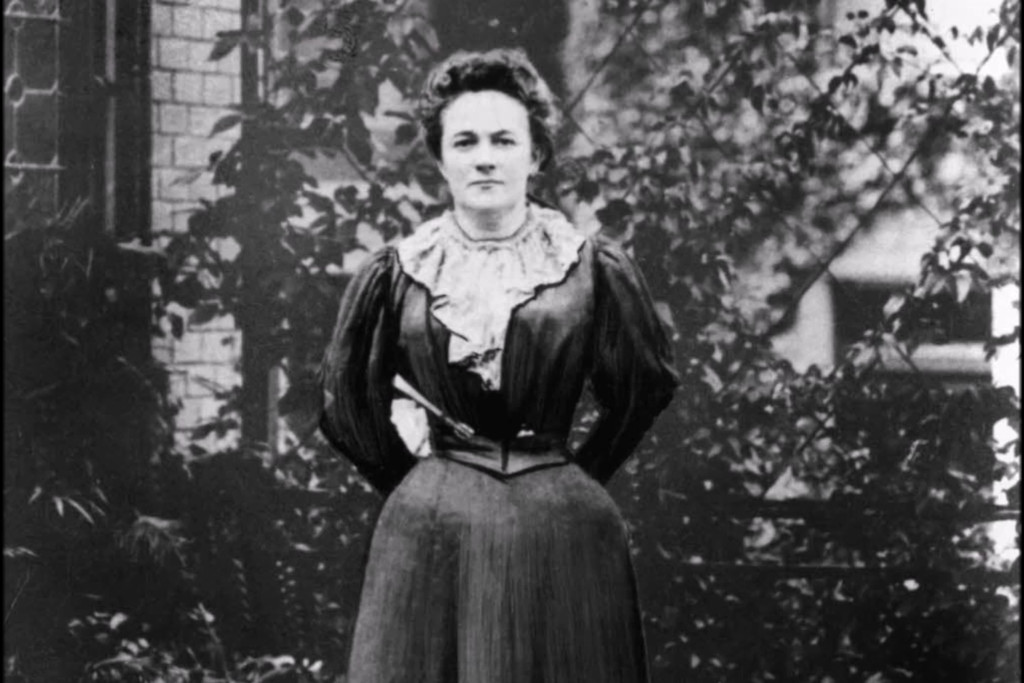
“All women, whatever be their position, should demand political equality as a means of a freer life, and one calculated to yield rich blessings to society.”
From a socialist political background, Clara Zetkin fervently believed that socialism was the only movement that could truly meet the needs of working-class women and that feminism was a particular tool of the upper and middle classes.
However, although her political views focused on class divisions, rather than gender, her work served to highlight the feelings and the real situation of women at that time and, it must be said, that it still happens in unfortunately many parts of the world.
In 1907, working women in New York City organized demonstrations demanding better wages, shorter hours, and the right to join a union. In 1909, garment workers in New York went on strike for 13 weeks in what was called "The 20K Raise."
These struggles inspired Zetkin to propose the day: to honor the struggles of working-class women and draw connections between the fight for workers' power and the fight against women's oppression. Socialists then began organizing International Women's Day marches the following year, drawing tens of thousands across Europe.
According to world socialists, at the core of Zetkin's contributions are absolutely vital and enduring ideas: the forms women's oppression took, its roots in capitalism and the family, and the need for a united revolutionary class struggle. worker to end that oppression.
“What made women's labour particularly attractive to the capitalists was not only its lower price but also the greater submissiveness of women.”
Today, the goal of Clara Zetkin's struggle remains: we commemorate this International Women's Day by calling for equal pay and working conditions for all women. Although great strides have been made in recent years, especially in social networks, the salary gap persists.
Let us celebrate, remember and honor all working women who are fighting, because it is only their own struggle that has brought them to where they are right now, although there is still much to be achieved.
Are you enjoying the content you are reading?
Don't miss any of the Industry Leaders publications by subscribing to our free weekly newsletter.
Subscribe NowBiography
Learn more about the personal life of this inspiring leader.
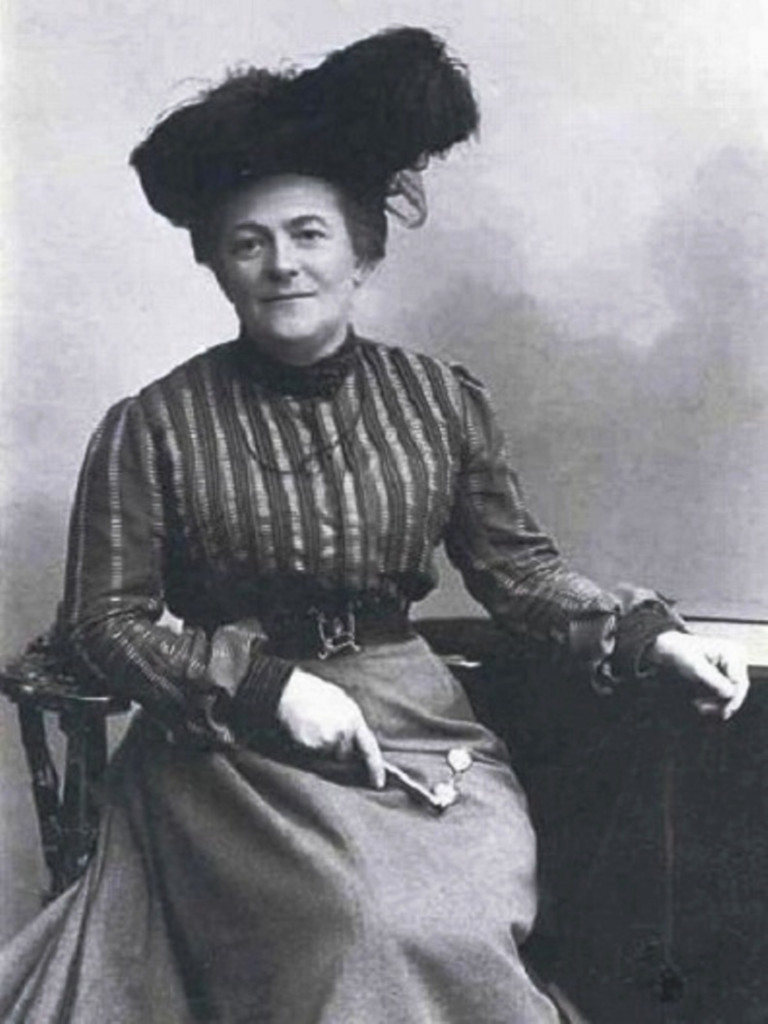
Clara Zetkin
Her birth name was Clara Josephine Eissner, but she is better known as Clara Zetkin. She was born on July 5, 1857 in Wiederau, a peasant village located in Saxony, in the then German Empire. She was the youngest of 3 siblings, born into a modest bourgeois family.
Her father, Gottfried Eissner, was a Protestant church organist and school teacher, while her mother, Josephine Vitale, came from a middle-class family in Leipzig and was highly educated.
In 1872 her family moved to Leipzig, where she was educated at the Leipzig Teachers' College for Women. While she was at school, she established contacts with the rank and file of what would become the German Social Democratic Party (SPD).
Due to Otto Von Bismarck's ban on socialist activity in Germany in 1878, Ella Zetkin went to Zurich in 1882 and then went into exile in Paris, where she studied to be a journalist and translator.
Clara Zetkin's political career began after being introduced to Ossip Zetkin, whom she would later marry. Within a few months of attending and participating in socialist meetings, Clara became fully committed to the party, offering a Marxist approach and calling for women's liberation.
During her time in Paris, she played an important role in the founding of the Second Socialist International group.
Zetkin was very interested in women's politics, including the fight for equal opportunity and women's suffrage. Upon her return to Germany nearly a decade later, she became editor of the Social Democratic Party's (SPD) women's newspaper, Die Gleichheit (Equality), a position she held for twenty-five years.
In August 1910, an International Women's Conference was organized to precede the general meeting of the Second Socialist International in Copenhagen, Denmark. Inspired by the actions of Luise Zietz, an American socialist, she supported the establishment of an International Women's Day, although no date was specified at that conference.
The outbreak of war in 1914 radically disillusioned Zetkin. She became sick and depressed and hostile towards what she considered a "bankrupt proletariat".
Estranged from the SPD, she convened an international women's conference in Bern in 1915, upholding the ideal of internationalism amid the bloodshed facilitated by the nationalist "opportunism" of the Second International. She was arrested in 1915 for her anti-war stance and charged with "treason," but due to her poor health, she was released after four months.
In 1916, Zetkin was one of the co-founders of the Spartacist League (Marxist revolutionary movement) and the Independent Social Democratic Party of Germany (USPD), which had split in 1917 from its mother party, the SPD, in protest at its pro-Government stance. from the war.
In January 1919, after the German Revolution in November of the previous year, the KPD (Communist Party of Germany) was founded; Clara Zetkin also joined this and represented the party from 1920 to 1933 in the Reichstag.
In 1925 she was elected president of the German left-wing solidarity organization Rote Hilfe. In August 1932, as President of the Reichstag by seniority, she was entitled to give the opening speech, and she used it to call on the workers to unite in the fight against fascism.
When Adolf Hitler and his Nazi Party took power, the Communist Party of Germany was banned, after the Reichstag fire in 1933. Ella Zetkin went into exile for the last time, and this time she would go to the Soviet Union.
She died there, in Arkhangelskoye, near Moscow, in 1933, at the age of 76. Her ashes were placed in the Kremlin Wall Necropolis, next to the Moscow Kremlin Wall, near Red Square. Her funeral was attended by leading communists from all over Europe, including Joseph Stalin and Lenin's widow, Nadezhda Krupskaya.
ACKNOWLEDGMENTS
After 1949, Zetkin became a very famous heroine in the German Democratic Republic (East Germany), and every major city had a street named after her. Even today, the name of Clara Zetkin can still be found on the maps of the former lands of the GDR.
In addition, she had some recognitions, among which the following stand out:
- Order of the Red Banner in 1927.
- Order of Lenin in 1932.
- Commemorated on the ten-mark note and the twenty-mark coin of the German Democratic Republic (GDR) (East Germany).
- In 1954, the GDR established the Clara Zetkin Medal (Clara-Zetkin-Medaille).
- In 1955, the Leipzig city council established a new recreation area near the city center called “Clara-Zetkin-Park”.
- In 1967, a statue of Clara Zetkin, sculpted by GDR artist Walter Arnold, was erected in Leipzig's Johannapark in commemoration of her 110th birthday.
- In 1987, the GDR issued a stamp with her photo.
PRIVATE LIFE
When she went into exile in Paris in 1882, she met and fell in love with the Russian revolutionary Ossip Zetkin and gave birth to their sons Maxim Zetkin (1883-1965) and Kostja Zetkin (1885-1980), who, it is said, she cared for during the day and then worked as a writer and translator at night.
Other Interesting Leaders
We also recommend the biographies and success formulas of these other great leaders.
Inventing is seeing what everyone has seen and thinking what no one has thought
Guillermo González Camarena
Color TV Inventor
Imagine a world in which every single person on the planet is given free access to the sum of all human knowledge. That's what we're doing

Jimmy Wales
Co-founder of Wikipedia
Before you are a leader, success is all about growing yourself... When you become a leader, success is all about growing others
Jack Welch
Business Executive and Writer
Get Our Weekly Newsletter for Free
Subscribe to the Industry Leaders weekly newsletter and receive the latest article released.