
Success Formula
Find out what were the keys that led this inspiring leader to success.
We know that many of the world leaders were not made overnight, but had to work hard to get what they wanted. But over time, only a few people leave such an impact on the world that it truly benefits future generations.
The paths that lead to success are many. Even if you don't have many options available, successful people don't sit still. Instead, they try whatever makes the most sense to them, and if they fail, they get up and move on to the next option. One of them is Jack Welch.
Go to the Leader's Bio
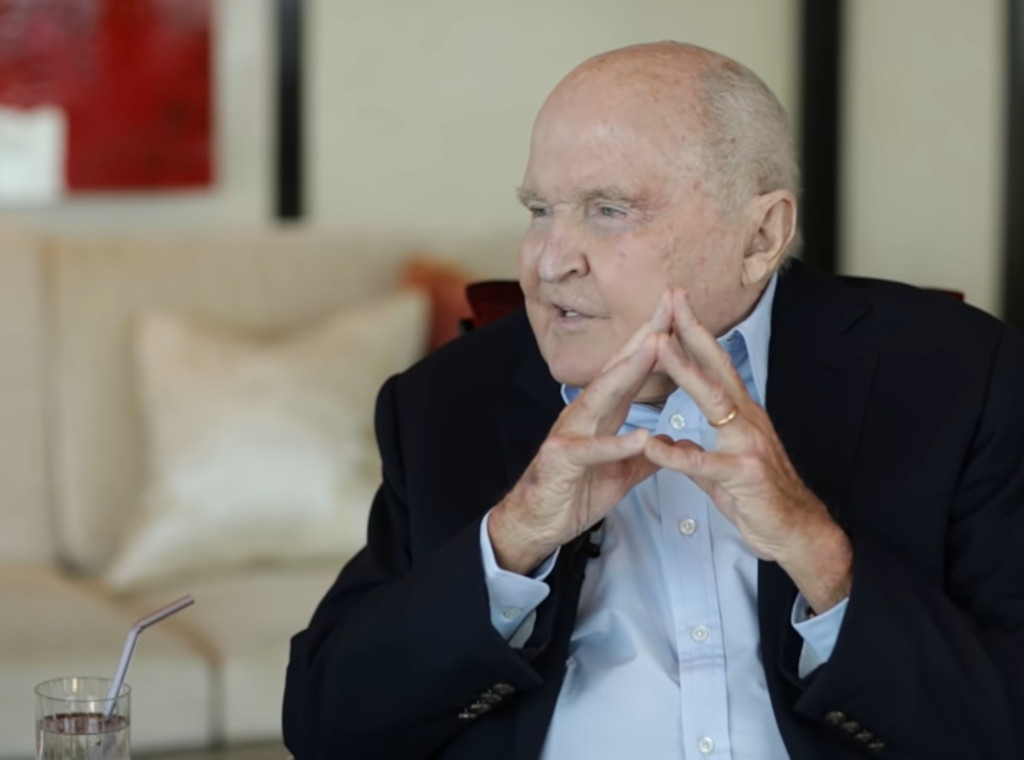
“Face reality as it is, not as it was or as you wish it to be.”
When Jack Welch became CEO of General Electric in 1981, he was expected to be only the eleventh CEO of the company in its 120-year existence, and while it was showing itself to be a solid company, it was beginning to show signs of needed change, as decline was imminent.
Given such a scenario, and after 20 years as CEO of the company, Welch increased General Electric's market value from $13 billion to nearly $300 billion in 2001. He led the once-troubled company to what then it was the most profitable and largest corporation in the world.
How did he do it? Jack Welch was a ruthless cost-cutter. At the beginning of his era as CEO Welch laid off thousands of employees, earning him the nickname "Neutron Jack".
His method called "the 20-70-10 rule" consisted of classifying his staff into 3 categories: good, average and bad, which represent 20%, 70% and 10% of the company. By laying off that 10%, over time he created a better company.
“Before you are a leader, success is all about growing yourself...
When you become a leader, success is all about growing others”
Although their ways of operating may be blunt and highly debatable, we cannot deny the success that General Electric obtained with this method. This earned him several awards, including Fortune's title of "Manager of the Century".
From the life and career of Jack Welch, we can easily deduce that he was a man of conviction and someone who was not frightened or discouraged by the obstacles that came his way.
Jack Welch's Formula for Success is the perfect inspiration for anyone looking to advance his career or become a successful entrepreneur.
Are you enjoying the content you are reading?
Don't miss any of the Industry Leaders publications by subscribing to our free weekly newsletter.
Subscribe NowBiography
Learn more about the personal life of this inspiring leader.
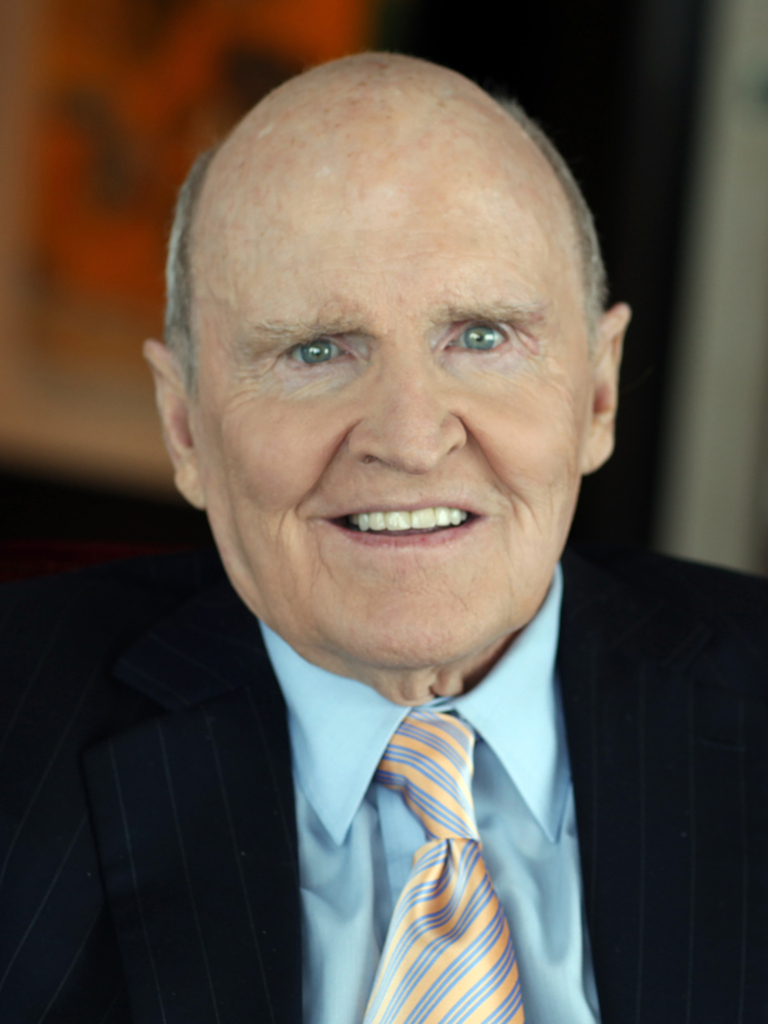
Jack Welch
John Francis Welch Jr, better known in the business world as Jack Welch, was born on November 19, 1935, in Peabody, Massachusetts. He is the only child of Irish Grace Welch and John Francis Welch Sr, a railroad conductor from Boston to Maine.
He was interested in business from a young age and started working at a very young age. He held summer jobs as a golf caddy, a shoe salesman, a newspaper delivery boy, among others.
Jack attended Salem High School, where he became a talented athlete: he loved playing sports like baseball, football, and hockey, sports that would make him competitive, a characteristic that would later define him.
Welch was accepted to the University of Massachusetts Amherst, where he studied for a degree in Chemical Engineering, graduating in 1957. He then enrolled at the University of Illinois, where he earned an M.A. and Ph.D., also in Chemical Engineering, in 1960.
That same year, in 1960, he joined the General Electric Company as a junior chemical engineer in the plastics division. He worked for a year and expected to receive a good raise, however, seeing that it was less than he expected, added to the bureaucracy of GE, Jack considered resigning.
He was persuaded to stay with GE by Reuben Gutoff, who promised to help create the business environment Welch needed, and he reluctantly agreed. An incident that occurred in 1963 almost cost him his job: there was an explosion on the roof of a building that he managed and he was nearly fired.
He continued to work for GE and was named vice president and head of the entire plastics division in 1968, just eight years after joining the company. Noting that the division had grown under his management, he also became vice president of the metallurgical and chemical divisions in 1971.
Throughout the 1970s he worked tirelessly and was promoted from position to position in rapid succession, managing each challenging position with the same dedication and determination.
In 1980 it was announced that Jack Welch would succeed Reginald H. Jones as CEO. In 1981, Welch, 45, took over from his predecessor to become General Electric's youngest chairman and CEO.
He was considered "brutal" because of his dismissal policies. He frequently fired employees and could sometimes be too strict with them. However, his leadership strategies worked and the company increased its revenues exponentially over the years.
He served as CEO and Chairman of the company for 20 years from 1981 until his retirement in 2001. The value of the company increased 4,000% during his tenure and he was hailed as one of the best business leaders in the world. USA.
Following Welch's retirement from General Electric, he became an adviser to the private equity firm Clayton, Dubilier & Rice and the CEO of IAC. In addition to his consulting and advisory roles, Welch has been active on the public speaking circuit and co-wrote a popular column for BusinessWeek with his wife, Suzy, for four years as of November 2009.
In December 2016, Welch joined a business forum convened by then-President-elect Donald Trump to provide strategic and policy advice on economic issues.
ACKNOWLEDGMENTS
In addition to being recognized as one of the best CEOs in history, Jack Welch received some awards, among which are:
- Was named 'Manager of the Century' in 1999.
- His book “Winning,” which he co-wrote with his wife Suzy Welch in 2005, became No. 1 on the Wall Street Journal bestseller list.
- In honor of Jack Welch, the College of Business at Sacred Heart University in Connecticut was renamed the Jack Welch College of Business in 2016.
- Additionally, on March 11, 2010, Welch appeared as himself on the NBC sitcom 30 Rock, appearing in the season four episode "Future Husband".
PRIVATE LIFE
Welch had four children with his first wife, Carolyn Osburn, and they divorced in April 1987 after 28 years of marriage.
His second wife, Jane Beasley, was a former lawyer. She married Welch in April 1989 and they divorced in 2003. Although Welch had worked out a prenuptial agreement, Beasley insisted on a ten-year time limit for its enforceability, and therefore could only divorce, leaving approximately $180 million dollars in assets.
Welch's third wife, Suzy Wetlaufer, briefly served as editor-in-chief of the Harvard Business Review. Welch's wife at the time, Jane Beasley, learned of an affair between Wetlaufer and Welch. Beasley informed the Review, and Wetlaufer was forced to resign in early 2002 after admitting the affair with Welch while she was preparing an interview with him for the magazine.
Other Interesting Leaders
We also recommend the biographies and success formulas of these other great leaders.
Wy goal is simple. It is a complete understanding of the universe, why it is as it is and why it exists at all
Stephen Hawking
Theoretical Physicist and Cosmologist
The man who acquires the ability to take full possession of his own mind may take possession of anything else to which he is justly entitled
Andrew Carnegie
Industrial Magnate and Philanthropistr
By paying attention to crazy people, great discoveries are made

Erin Brockovich
Legal Clerk and Environmental Activist
What made women's labour particularly attractive to the capitalists was not only its lower price but also the greater submissiveness of women
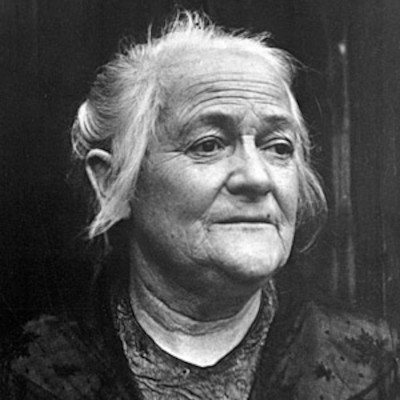
Clara Zetkin
Advocate for Women's Rights
Get Our Weekly Newsletter for Free
Subscribe to the Industry Leaders weekly newsletter and receive the latest article released.