
Success Formula
Find out what were the keys that led this inspiring leader to success.
In the world of science they are used to big numbers and probabilities. But how likely could it have been that this young British physicist who was given no more than 3 years to live would have become one of the most prolific physicists of our time?
Stephen Hawking's simple survival would have been a medical marvel, but of course it wasn't just that: he became one of the world's most famous scientists, hailed as a great researcher, for his best-selling books, and for his stunning triumph over adversity.
Go to the Leader's Bio
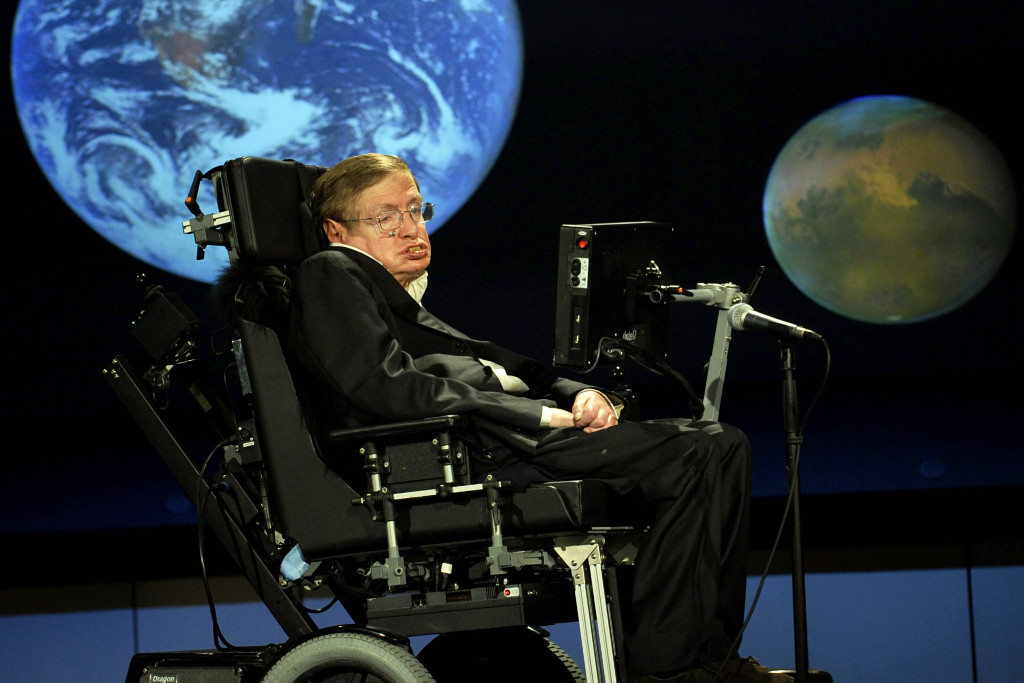
“I have noticed that even those who assert that everything is predestined and that we can change nothing about it still look both ways before they cross the street”.
His life was confined by ALS, (Amyotrophic Lateral Sclerosis), a progressive motor neuron disease that over time restricts a person's ability to control their muscles. However, his horizons were as vast as the universe he explored.
Through the generation of unconventional thoughts and his conviction to pursue his dreams, despite his enormous difficulties, Stephen Hawking conveys a story of inspiration to many of us in different ways.
Hawking became the leader of his generation in exploring gravity and the properties of black holes, previously studied by Albert Einstein, as well as bottomless gravitational wells so deep and dense that not even light can escape. from them.
The discovery of "Hawking radiation", as it is known, reversed what was thought about black holes. He transformed them from destroyers to creators and destroyed the dream of arriving at a final theory and gave it a new and confusing direction.
“My goal is simple. It is a complete understanding of the universe, why it is as it is and why it exists at all”
Trying to better understand Hawking's discovery has been a source of much fresh thinking for almost 50 years, and we are probably still far from fully understanding it.
Stephen was a man who pushed the limits of his intellectual life, but also of his professional and personal life. He traveled the world to scientific meetings, enjoyed a full life as a couple, raised a family, and contributed much to the understanding of the emergence of our universe.
Although he might have seemed disabled to us, he did not see it that way, and he considered himself as:
“A scientist first, a popular science writer second, and in every way that matters, a normal human being, with the same desires, drives, dreams, and ambitions as the person closest to him”
Are you enjoying the content you are reading?
Don't miss any of the Industry Leaders publications by subscribing to our free weekly newsletter.
Subscribe NowBiography
Learn more about the personal life of this inspiring leader.
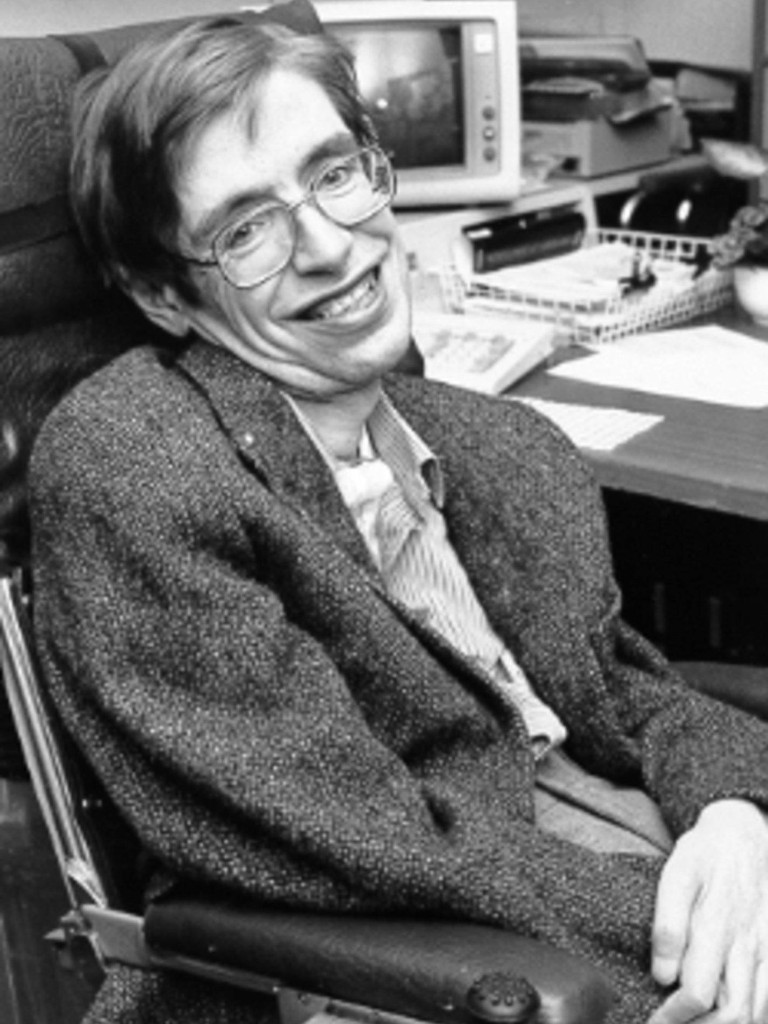
Stephen Hawking
Stephen William Hawking, better known only as Stephen Hawking, was born in Oxford, England, on January 8, 1942.
His father, Frank Hawking, was a biologist and his mother, Isobel Walker, graduated from Philosophy, Politics and Economics, both graduates from the University of Oxford.
When he was eight years old, his family moved to St. Albans. The Hawking family was considered very intelligent and somewhat eccentric: it is said that, at mealtime, they did so in silence and read a book. Stephen had 2 sisters, Philippa and Mary, as well as a foster brother named Edward Frank David.
At the age of 11, Stephen attended St. Albans School and later University College, Oxford, his father's old school. Hawking wanted to study mathematics, but since the degree was not available at school, he chose physics. He graduated at age 20 with a first class honors degree.
Hawking subsequently undertook research at Cambridge University's Trinity Hall for a Ph.D. in Astronomy and Cosmology.
In 1963, Hawking was diagnosed with amyotrophic lateral sclerosis (ALS), a motor neuron disease in which the nerves that control muscles become inactive while sensory nerves function normally. His doctors expected him to die in three years. He surpassed the doctors' predictions and finished his Ph.D. in 1966.
Stephen's work on black holes helped prove the idea of a "Big Bang" at the birth of the universe. In the 1940s this theory emerged, but it was not fully accepted by cosmologists.
Working with mathematician Roger Penrose in 1971, Hawking realized that black holes were like the Big Bang in reverse, and that meant that the mathematics he had used to describe them also described this phenomenon. It was a key moment to show that the Big Bang really happened.
In 1974, Hawking gave an answer to one of Einstein's theories: a unified theory that combined general relativity with quantum mechanics. These two theories describe the universe on a cosmic and subatomic scale, respectively.
Hawking's attempts to combine them produced a surprising result: that black holes should shine. This effect is now known as 'Hawking radiation'. The work cemented his reputation as a key thinker of his generation.
As his body deteriorated, Hawking's career continued to grow. Speaking became more challenging, and in 1985, an emergency tracheotomy caused his total loss of speech. A Cambridge-built speech-generating device, combined with a software program, served as his electronic voice, allowing Hawking to select his words by moving his cheek muscles.
Hawking died at his home in Cambridge, England, on March 14, 2018, at the age of 76. His ashes were interred in the Abbey nave, between the graves of Sir Isaac Newton and Charles Darwin.
ACKNOWLEDGMENTS
His computer synthesized the voice and concept of “a great mind trapped inside a powerless body” and captured the imagination of audiences around the world.
Hawking's work in modern cosmology and in astronomy and theoretical physics is widely recognized. He became a Fellow of the Royal Society of London in 1974 and five years later was appointed to a professorial chair at Cambridge University once held by Isaac Newton.
Beyond these honors, he has obtained a large number of honorary degrees, awards and recognitions from the main universities and scientific societies of Europe and America. By the end of the 20th century, Stephen Hawking had become one of the world's best-known scientists.
He made appearances on television shows like The Big Bang Theory, The Simpsons and Red Dwarf. Even the 2014 film "The Theory of Everything" was a drama that captured the life and work of the British scientist.
PRIVATE LIFE
Stephen met his first wife, Jane Wilde, in 1962, a year before he was diagnosed with ALS. Due to predicted zero life expectancy, the couple became engaged in 1964. Hawking would later say that the engagement gave him "something to live for," and they married on July 14, 1965. The couple had 3 children: Robert, Lucy and Timothy.
After 30 years of marriage, they divorced in 1995, and Hawking married a nurse named Elaine Mason that same year. Five years later, there was speculation that the physicist was suffering from mistreatment by Mason, but he refused to file a complaint.
In 2006, Hawking and Mason divorced, and Hawking resumed closer relationships with Jane, their children, and her grandchildren.
Other Interesting Leaders
We also recommend the biographies and success formulas of these other great leaders.
The man who acquires the ability to take full possession of his own mind may take possession of anything else to which he is justly entitled
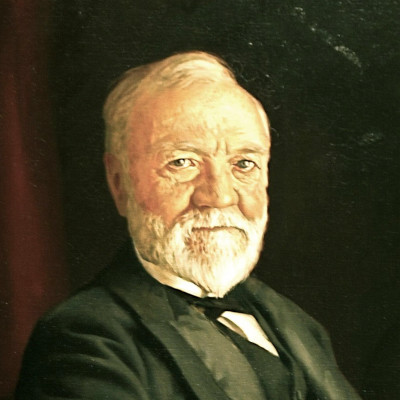
Andrew Carnegie
Industrial Magnate and Philanthropistr
By paying attention to crazy people, great discoveries are made

Erin Brockovich
Legal Clerk and Environmental Activist
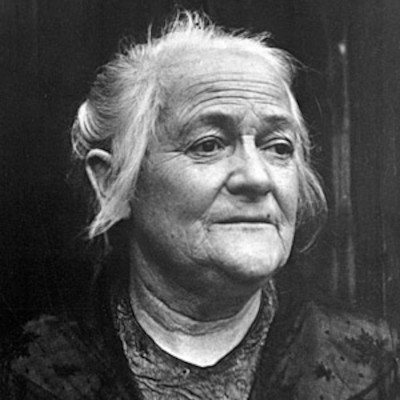
What made women's labour particularly attractive to the capitalists was not only its lower price but also the greater submissiveness of women
Clara Zetkin
Advocate for Women's Rights
Get Our Weekly Newsletter for Free
Subscribe to the Industry Leaders weekly newsletter and receive the latest article released.